

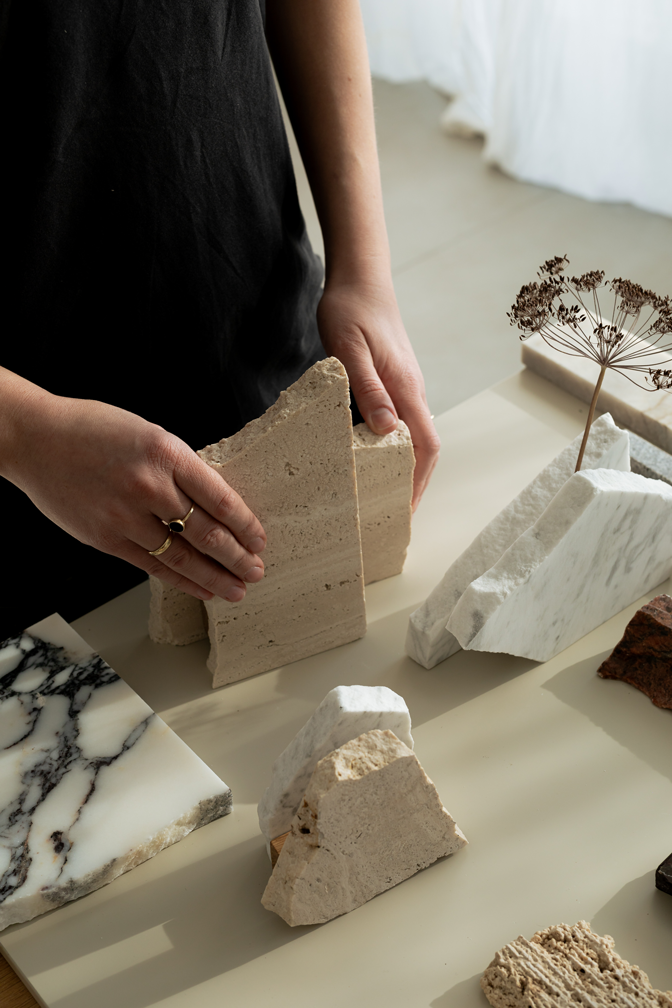
For years, we have designed and created spaces where mineral materials played a central role.
The beauty of textures, the light falling on a limewashed wall, the simplicity of natural materials... this is what built our reputation.
And even today, this expertise is an integral part of Domeco.
But, over the course of our projects, something began to intrigue us.
Why do certain spaces naturally evoke a sense of calm?

When the app took us further
Mineral materials taught us to observe differently.
We saw how a texture modifies the perception of a volume, how light transforms an ambiance, and how certain materials instinctively provide a sense of calm or security.
Little by little, something became clear.
The material was only part of the experience.
This research led us to neuro-architecture: a discipline that studies the influence of the built environment on our emotions, behavior, and well-being.
We had finally found the words to explain what we had intuitively observed for years.
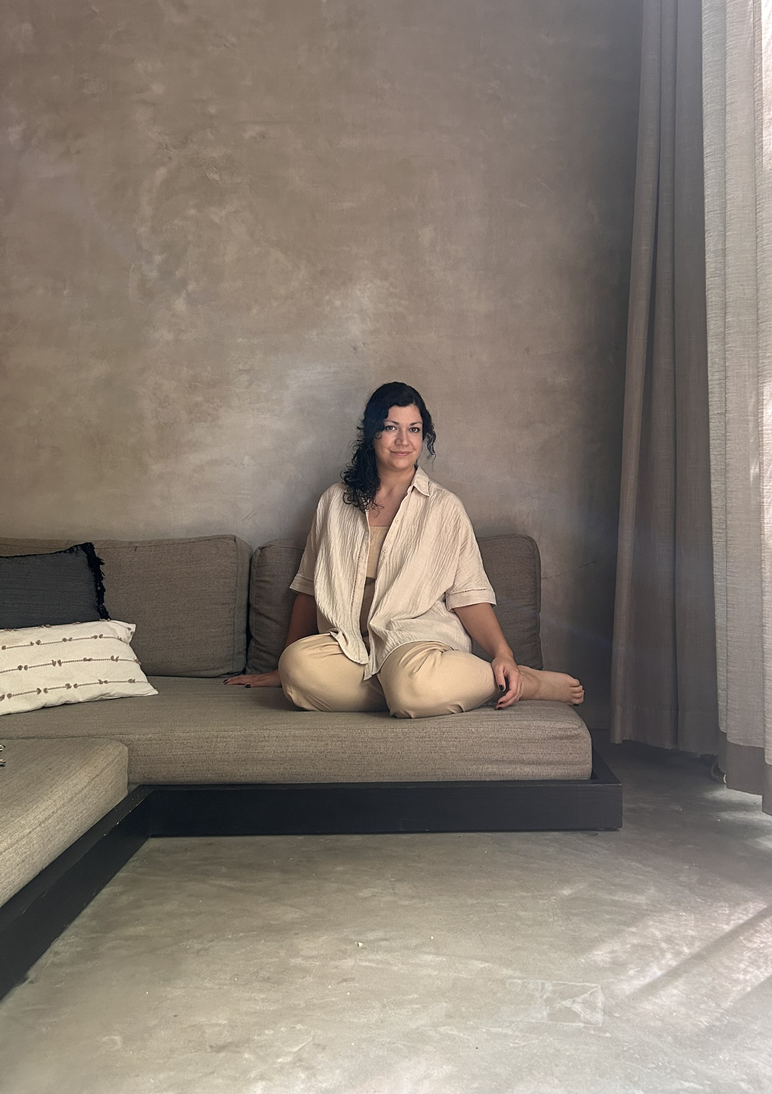
Our role today
We don't just design spaces.
We consider what people will experience within them.
Domeco assists owners, architects, designers, developers, and businesses in integrating the human experience into the heart of their projects.
Our involvement can supplement an existing design or be integrated from the initial stages, whether for a residence, commercial space, hotel, or real estate development.
Our role is to help teams make more conscious choices, so that every decision contributes to a clear intention: to improve the quality of life of the occupants.
ANNE, PRESIDENT OF DOMECO

Why this approach is gaining importance
Well-being is becoming a new value criterion.
For a long time, real estate design primarily focused on location, size, function, aesthetics, and resale value.
Today, people are increasingly seeking environments that promote calm, recovery, concentration, connection, health, and quality of life.
According to the Global Wellness Institute, the global wellness real estate market reached $876 billion in 2025 and could exceed $1.8 trillion by 2030.
Between 2019 and 2025, this sector reportedly experienced an average annual growth of approximately 23.6%, a significantly faster progression than that of global construction as a whole.
Canada alone represented an estimated market of $20 billion in 2025, with an average annual growth of 22.2% since 2019.
These figures do not mean that consumers are directly purchasing hundreds of billions of dollars in neuro-architecture services.
Rather, they demonstrate that a growing share of real estate investments is directed towards buildings and environments designed with the explicit intention of supporting the health and well-being of occupants.
Demand is changing, and projects capable of meeting it now have a genuine distinguishing factor.

Two ways to collaborate with us today
Some people contact us because they wish to transform their walls using natural mineral materials.
Others want to be supported from the very first thoughts of their project in order to design an environment centered around people.
Today, we do both.
Because we believe that a space can be beautiful.
But that it can also become a real lever for quality of life.